
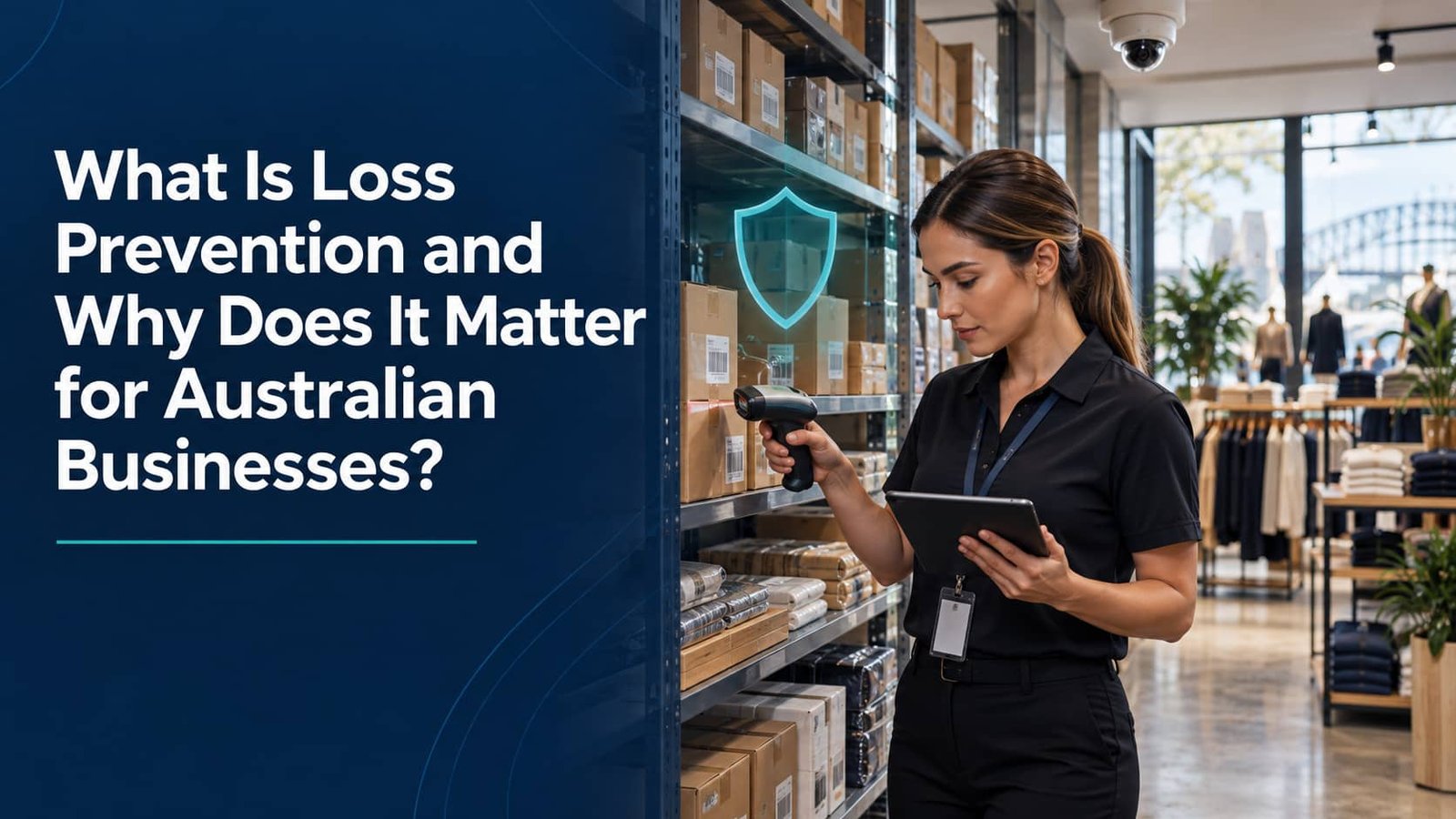
What Is Loss Prevention and Why Does It Matter for Australian Businesses?
A business can be busy, attract customers and generate steady sales while still losing money in ways that are difficult to see. Missing stock, damaged goods, incorrect refunds and poorly controlled access can gradually reduce the value of that hard work. Some losses become obvious immediately, while others remain hidden until a stocktake, financial review or customer complaint reveals a problem. Loss prevention is the work of understanding where these losses occur and putting practical controls in place to reduce them. For Australian businesses, it connects security with everyday operations, helping protect products, equipment, revenue and the people responsible for managing them. Its value lies in preventing avoidable problems before they become an accepted cost of doing business.
What Is Loss Prevention?
Loss prevention is a coordinated approach to reducing losses caused by theft, fraud, mistakes, damage and weaknesses in business processes. It involves identifying what needs protection, examining how something could go wrong and introducing controls that suit the level of risk. In a retail store, this might include accurate stock records, clear refund procedures and appropriate security coverage. In a warehouse, it could involve checking incoming deliveries, controlling access to storage areas and documenting damaged goods. A service business may focus on equipment handling, purchasing approvals and billing accuracy. Although the methods vary, the underlying purpose remains the same: to protect business value while keeping normal work practical and efficient. Effective loss prevention gives managers a clearer understanding of what is happening and how to investigate discrepancies fairly.
Loss Prevention Extends Beyond Shoplifting
Shoplifting is a visible example of business loss, but it represents only part of the issue. Stock may disappear from the records because a delivery was entered incorrectly, an item was transferred without documentation or damaged goods were discarded without being recorded. A refund might be processed twice, or a supplier invoice may contain a quantity that does not match the delivery. These situations can produce a financial loss without deliberate theft. Treating every discrepancy as suspicious behaviour can send a business in the wrong direction and damage relationships with employees or customers. A useful loss prevention process starts by establishing the facts and considering several possible explanations. This makes it easier to choose a suitable response, whether that means correcting a record, improving training, changing a procedure or investigating potential misconduct.
Why Small Losses Deserve Attention
A single missing item or incorrect transaction may appear too minor to justify investigation. The difficulty is that repeated small losses can become a persistent drain on profitability, particularly when the same weakness affects several locations or shifts. They can also create costs beyond the value of the original item. Staff may spend time searching for stock, dealing with complaints, processing replacements or correcting financial records. A customer who was promised an available product may leave disappointed when the item cannot be found. Over time, inaccurate information makes purchasing and planning less reliable. Paying attention to recurring discrepancies helps businesses identify the underlying cause rather than repeatedly absorbing the consequences. The objective is a proportionate response that addresses patterns without making every minor error an unnecessarily complicated event.
Understanding Inventory Shrinkage
Inventory shrinkage describes a shortfall between the stock a business expects to hold and the stock physically available. That gap can arise through theft, receiving errors, unrecorded damage and other recording or handling problems. A stocktake can establish that a discrepancy exists, but it does not automatically explain how it happened. Businesses need to examine the records around receiving, storage, transfers, sales and returns to understand where the difference may have developed. For example, a shortage discovered on the shop floor may have originated when a delivery was first accepted. Regular checks of selected items can help identify problems earlier, particularly for products that are valuable, frequently handled or repeatedly affected by discrepancies. Reliable stock information supports loss prevention while also helping businesses make better replenishment and customer-service decisions.
Finding Weaknesses in Everyday Processes
Many loss prevention improvements begin with ordinary tasks that have become inconsistent. A delivery may be signed for before its contents are checked, a storeroom may remain unlocked during busy periods or several employees may share access credentials. These arrangements can make it difficult to establish what happened when something goes missing. Reviewing the movement of products, money and equipment from one stage to the next helps reveal where responsibility becomes unclear. Businesses can then introduce straightforward controls, such as matching deliveries against orders, recording stock transfers and assigning individual system access where appropriate. Each control should have an understandable purpose. Procedures that are unnecessarily difficult to follow may be bypassed, so the people doing the work should be involved in identifying a practical solution.
The Role of Employees in Preventing Loss
Employees are well placed to notice recurring problems because they work with the products, systems and customers every day. A team member may recognise that a particular item is often mislabelled, that returns are being placed in the wrong location or that a delivery process regularly creates confusion. Businesses benefit when staff can raise these concerns without assuming they will be blamed for the problem. Training should explain how to handle stock, document exceptions and report incidents, with clear guidance about when to involve a supervisor. It should also make personal safety a priority rather than encouraging employees to confront people over suspected theft. A constructive loss prevention culture treats accurate reporting as useful information. This supports earlier intervention and helps distinguish honest mistakes from behaviour that needs further investigation.
How Security Measures Support Loss Prevention
Security personnel, access controls, alarms and CCTV can form part of a loss prevention programme, particularly where a business has identified risks involving unauthorised entry or theft. Their effectiveness depends on how they fit the premises and operating procedures. A camera may provide useful information about an incident, but it will have limited value if the relevant area is not visible or staff cannot retrieve the recording when needed. Similarly, a locked storage area only provides meaningful protection if access is managed consistently. Security officers can assist through observation, reporting and an appropriate response within their role. Physical measures work best alongside reliable business records because understanding a loss often requires both operational information and evidence about the event itself.
Using Technology to Identify Patterns
Inventory platforms, sales systems and reporting tools can help businesses compare information that would otherwise take considerable time to review manually. Repeated stock adjustments, unusual volumes of refunds or recurring discrepancies at a particular stage may justify closer examination. These patterns are starting points for investigation rather than proof of wrongdoing. A store processing more returns may handle a different customer mix, and an employee recording more damaged goods may simply be following the procedure more carefully. Managers need to check the underlying records and understand the circumstances before drawing conclusions. Technology becomes useful when it helps people ask better questions and investigate efficiently. It becomes less useful when alerts are accepted without review or when inaccurate data is treated as a reliable explanation.
Protecting Revenue Through Transaction Controls
Loss prevention also involves checking how money moves through the business. Refunds, discounts, purchasing and supplier payments can all create avoidable losses when approval processes are unclear or records are incomplete. A practical approach might include defined refund conditions, review of exceptional discounts and checks that invoices match goods or services received. Where staffing allows, separating the person who requests a payment from the person who approves it can provide another opportunity to catch a mistake. Smaller businesses may need a different arrangement, such as an owner reviewing selected transactions regularly. Controls should reflect the business’s actual exposure rather than adding approval steps to every routine activity. The aim is to identify unusual transactions while allowing legitimate customer service and purchasing to continue efficiently.
Building a Proportionate Loss Prevention Plan
A useful plan begins with the business’s own experience: what has been lost, where discrepancies keep appearing and which consequences would be most disruptive. From there, managers can select a manageable number of controls, assign responsibility and decide how results will be reviewed. The Australian Government’s guidance on protecting a business similarly places risk management within a broader approach to business protection. For loss prevention, this means considering operational weaknesses as well as security incidents, and checking whether the response addresses the cause. A business with repeated receiving errors may gain more from a better delivery-checking process than another camera. Reviewing the plan after incidents or operational changes helps keep it relevant as the business grows. (Business.gov.au: Guide to protecting your business)
Measuring Improvement Without Creating the Wrong Incentives
Businesses need evidence that their loss prevention efforts are working, but the measures require careful interpretation. Stock accuracy, unexplained discrepancies, damaged goods and the time taken to resolve incidents can all provide useful information. A temporary increase in recorded incidents does not necessarily mean losses have increased; employees may have become more consistent at reporting them. Likewise, fewer reported problems could reflect poor reporting rather than genuine improvement. Managers should examine results alongside feedback from staff and the quality of the records. Comparing similar periods and accounting for changes in sales or stock levels can also make the review more meaningful. The goal is to understand whether losses are being reduced and processes are becoming more dependable, without encouraging people to hide problems to meet a target.
Why Loss Prevention Matters for Long-Term Business Health
Loss prevention helps businesses protect the value they already create. Accurate stock records support better purchasing, clear transaction controls reduce avoidable errors and consistent security procedures help people respond appropriately when something goes wrong. For Australian businesses, these improvements can strengthen both daily operations and the information used to make wider decisions. The most useful starting point is often a recurring problem that employees already recognise but have learned to work around. Investigating its cause and introducing a practical change can establish a repeatable approach to improvement. Over time, that approach helps a business reduce unnecessary losses, maintain accountability and operate with greater confidence in its records and processes.