
How AI Is Changing the Security Industry in Australia
A security camera can record an incident, but someone still needs to notice what happened, understand its significance and decide how to respond. That gap between collecting information and acting on it is where artificial intelligence can make a practical difference. Across security operations, AI offers ways to analyse footage, organise incident reports and bring potentially important activity to an operator’s attention. For Australian businesses protecting people, property and essential services, these capabilities raise an important question: how can technology improve protection while preserving human judgement and public trust? The answer depends on the system, the environment and the people responsible for using it. AI can support better security decisions, but it needs clear objectives, careful testing and accountable oversight.
Moving From Recorded Footage to Earlier Awareness
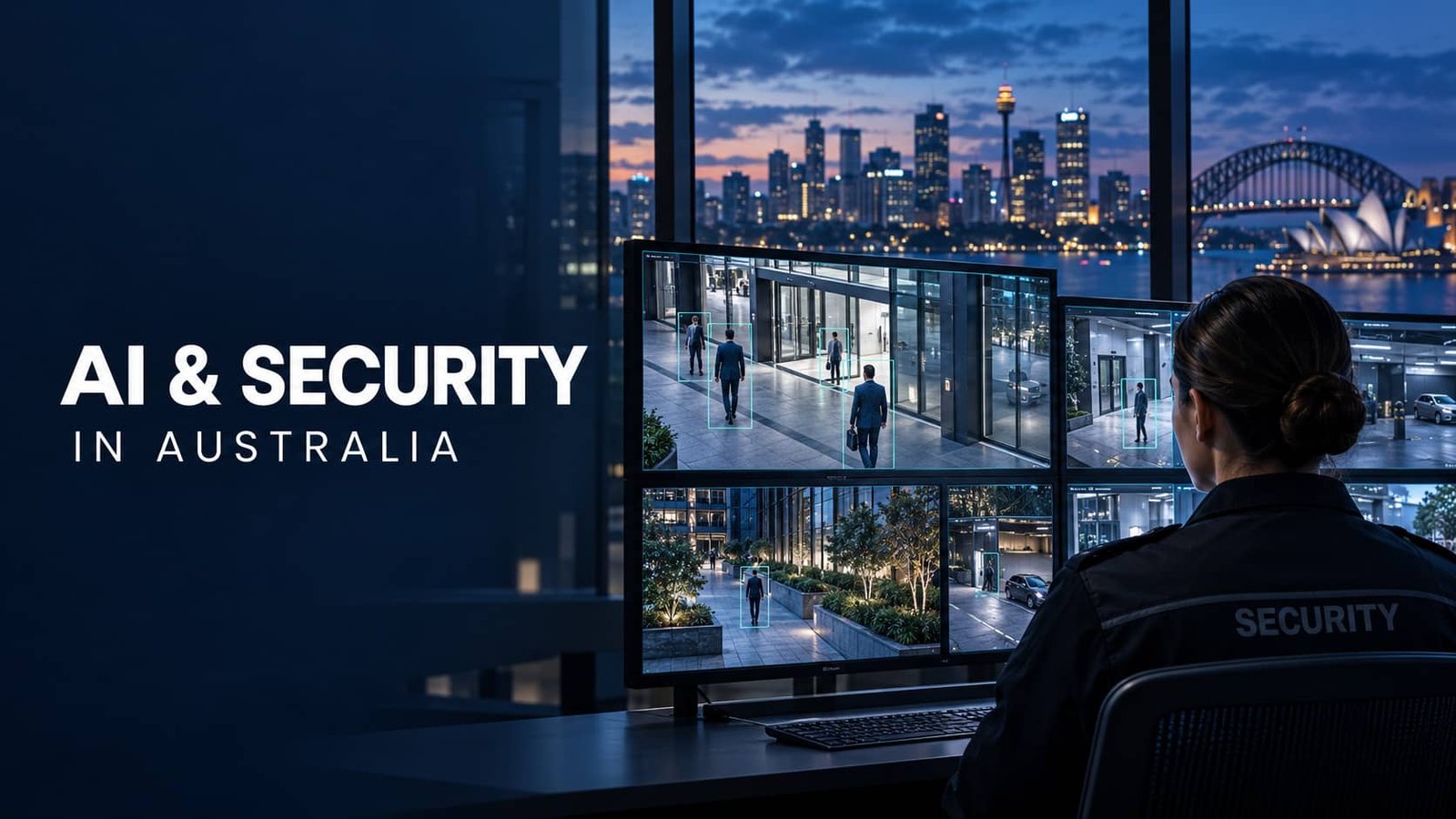
Traditional CCTV remains valuable for reviewing events and preserving evidence. However, recording an area does not guarantee that a developing incident will be noticed in time to intervene. Operators may be responsible for numerous camera feeds while also handling calls, alarms and requests from staff. AI-enabled video analytics can help direct attention towards defined events, such as a person entering a restricted zone or a vehicle appearing in an area outside expected operating hours. Consider a warehouse where deliveries stop at a particular time: an alert about movement near a loading bay could prompt an operator to check the footage and contact the site team. The technology’s role is to identify something worth reviewing. Whether that activity represents a genuine concern still depends on context, verification and an appropriate response.
Making Video Monitoring More Focused
One useful application of AI in the security industry is helping teams find relevant footage without manually reviewing every minute of a recording. Depending on the system, operators may be able to search for particular objects, vehicle movements or activity within a defined area and period. This can support investigations and help teams understand how an event unfolded. However, performance depends on practical conditions, including camera placement, lighting, obstructions and image quality. A system that performs well in a demonstration may struggle at a busy entrance or in an outdoor area after dark. Australian security providers and their clients therefore need to assess performance at the actual site. Useful questions include how often the system misses relevant activity, how many unnecessary alerts it creates and whether operators can verify its findings efficiently.
Helping Control Rooms Manage Information
Control rooms bring together information from cameras, access-control systems, alarms, patrol teams and client communications. During a busy shift, the challenge can be determining which signals belong to the same incident and which need immediate attention. AI-assisted tools may help organise related information, prioritise alerts or prepare an initial event summary for review. For example, an access alert and nearby camera activity could be presented together, giving an operator a clearer starting point for assessment. This potential benefit depends on reliable integration and sensible configuration. If every minor event receives a high-priority label, the system can create more noise instead of improving awareness. Control-room procedures should explain how alerts are checked, who makes escalation decisions and what staff should do when information is incomplete or systems are unavailable.
Supporting Access Control Without Assuming Every Alert Is a Threat
Access control is another area where AI can assist security teams. Analysing patterns in entry records may help highlight unusual activity, such as repeated failed access attempts or use of a credential at an unexpected time. These signals can support a closer look, but they do not establish wrongdoing. An employee may be working an approved late shift, a contractor may have received incorrect access instructions, or a credential may simply have expired. Security personnel need a straightforward way to check these explanations before taking action. It is also important to distinguish ordinary access analytics from biometric identification. Identifying a person through facial recognition introduces different privacy considerations from checking whether a door has been opened. The choice of technology should follow a defined operational need and an assessment of less intrusive alternatives.
Reducing Administrative Work in Security Operations
AI’s contribution to security is not limited to cameras and alarms. Incident reporting, shift handovers and client updates can require substantial administrative effort, particularly across multiple sites. A suitable AI tool could help turn structured notes into a draft report, organise events chronologically or highlight missing fields for an officer to complete. Used carefully, this may give staff more time for operational responsibilities while improving the consistency of documentation. However, an incident report must accurately reflect what was observed, said and done. An AI-generated draft must not invent details, change the meaning of an officer’s account or present an assumption as a confirmed fact. The original notes should remain available, and the person approving the report should check names, times, actions and unresolved details before it becomes an official record.
Using Patterns to Improve Security Planning
Security managers can also use analytical tools to examine recurring issues across locations and shifts. Repeated access problems, similar incident types or clusters of alarms may suggest that a procedure, piece of equipment or deployment arrangement needs attention. For example, repeated alerts near the same entrance might justify checking the door mechanism, reviewing delivery arrangements or adjusting patrol coverage. These findings provide questions to investigate rather than automatic answers. Historical records may be incomplete, and a site with more reports may simply have more thorough reporting practices. For Australian organisations managing varied environments, comparisons should account for operating hours, visitor numbers, site layout and the nature of the work. Good analysis helps managers direct attention and resources while leaving room for local knowledge and changing conditions.
Protecting Privacy and Maintaining Public Trust
AI-enabled security can involve sensitive information, particularly when systems identify individuals. Australia’s Office of the Australian Information Commissioner explains that biometric information used for automated identification or verification receives heightened protection under the Privacy Act. Its facial-recognition guidance emphasises a lawful basis for collection, privacy impact assessment, transparency, accuracy and secure information handling. For regulated organisations, a security objective does not remove the need to assess these obligations. Before introducing facial recognition, decision-makers should examine why identification is necessary, whether a less intrusive approach could address the problem and how the proposed system will affect people entering the premises. Those decisions need to be documented and reviewed as the use of the technology changes. (OAIC facial-recognition guidance)
Managing Incorrect Alerts and Overconfidence
An AI alert can look authoritative, especially when it appears on a dashboard with a confidence score or a prominent warning. Yet the system may be interpreting an unclear image, applying an unsuitable threshold or encountering conditions that differ from its training data. Security teams need to understand that confidence is not the same as certainty. A person waiting near a building may have a legitimate reason to be there, and unusual movement does not reveal someone’s intentions. Procedures should require staff to assess the underlying evidence and consider alternative explanations before intervening. Reviewing incorrect alerts is equally valuable: it can reveal a poor camera angle, an overly sensitive setting or a use case that the technology cannot handle reliably. These reviews help prevent repeated mistakes from becoming accepted practice.
Why Skilled Security Personnel Remain Essential
AI can assist with recognising patterns and processing information, but security work also involves communication, reassurance, de-escalation and situational judgement. A camera alert cannot calm an anxious visitor, explain an access restriction respectfully or understand every factor affecting a confrontation. These responsibilities remain with trained people. As AI becomes part of a security operation, staff need practical training in interpreting outputs, recognising limitations and recording the reasons for their decisions. They also need confidence to challenge the system when its suggestion conflicts with observable evidence. For employers, the opportunity is to give security personnel better information and reduce avoidable administrative work. Any decision about staffing should still reflect the site’s risks, response requirements and service obligations, rather than an assumption that automated monitoring provides equivalent protection.
Introducing AI With a Clear Purpose
An effective starting point is one specific operational problem that can be measured. A business might want to reduce the time spent finding incident footage or improve the usefulness of after-hours alerts. Before a trial begins, it should record current performance and define what improvement would look like. The assessment should include accuracy, review time, staff workload and the consequences of missed or incorrect alerts. It should also examine who can access the system, how data is protected and what happens during an outage. A successful trial provides evidence for a wider rollout; an unsuccessful one can reveal that a simpler operational change would be more useful. This approach keeps attention on security outcomes and helps organisations avoid buying capabilities that do not suit their environment.
The Future of AI in Australia’s Security Industry
AI is changing the tools available to security teams, especially how they review information and identify activity that needs attention. Its long-term value will depend on whether those capabilities lead to more reliable decisions and better responses in real operating conditions. For Australian businesses, the strongest approach combines suitable technology with experienced personnel, clear procedures and responsible information handling. Better security will not come from generating the greatest number of alerts or collecting the most data. It will come from giving the right people useful information at the right time, with the authority and training to act appropriately. Organisations that keep those priorities in view will be better placed to assess where AI adds value and where human observation and judgement remain decisive.