
How Technology Is Changing the Role of Security Officers
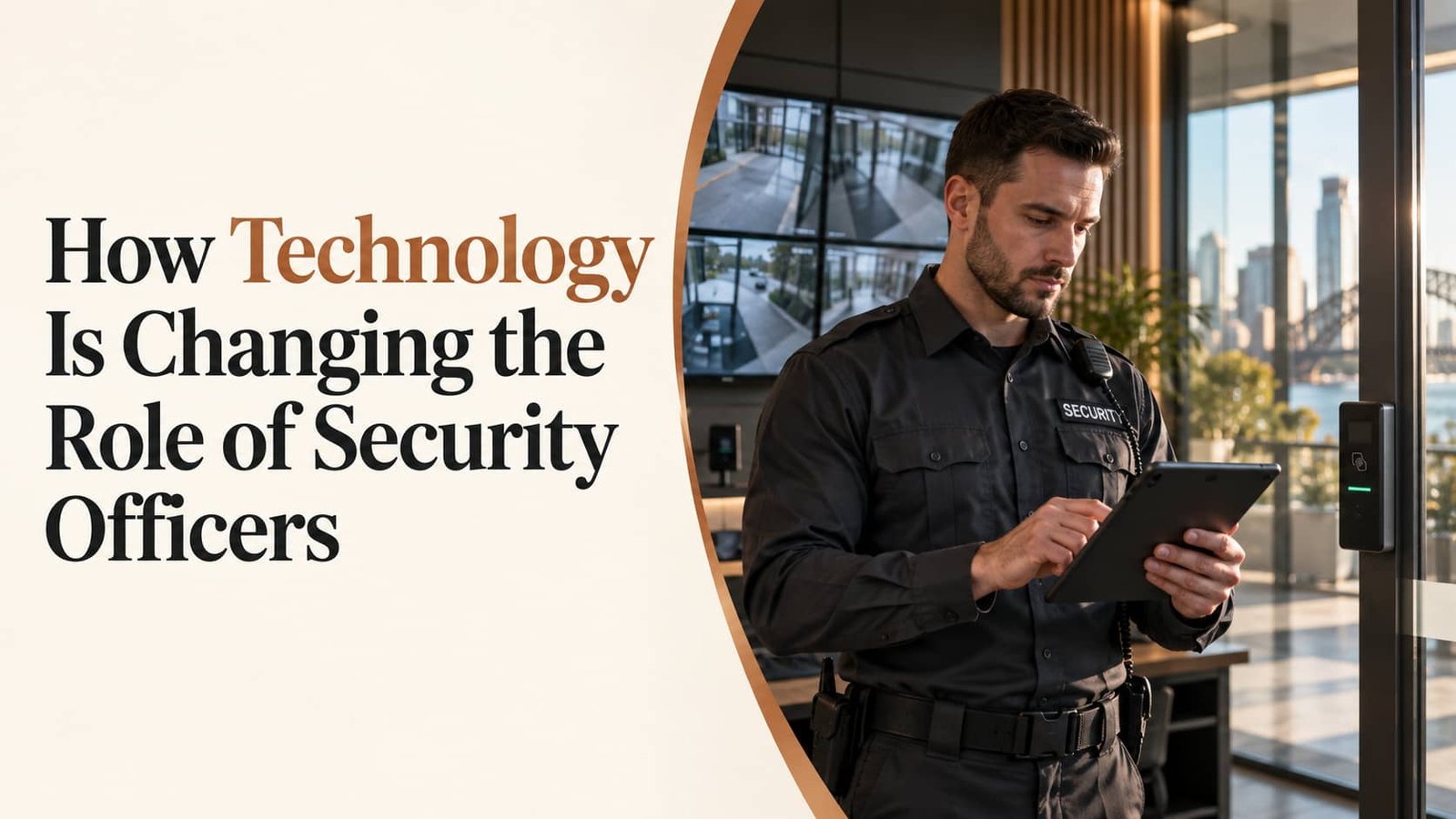
A security officer arrives for an evening shift and opens a mobile app to review the latest site instructions. An unresolved access issue appears in the previous officer’s handover, alongside a photograph and a maintenance reference. Later, an alert draws attention to activity near a restricted entrance, allowing the officer to check the situation and coordinate a response. This example illustrates how technology can change everyday security work: information becomes easier to access, observations can be recorded sooner, and decisions can draw on more than what one person sees during a patrol. For the security industry in Australia, these capabilities create opportunities to improve service delivery. They also place greater emphasis on digital skills, careful interpretation and the ability to use technology without losing awareness of the physical environment.
From Physical Presence to Informed Decision-Making
A visible security presence remains valuable, but officers also need to understand what is happening across their assigned area. Technology can bring together information that would otherwise sit in separate records, conversations or systems. An access log may explain who entered a building, while a maintenance update may clarify why a door is temporarily unavailable. Having that context can help an officer avoid unnecessary escalation or recognise a problem that needs prompt attention. However, more information does not automatically produce better decisions. Officers need to know which sources are reliable, whether records are current and what remains unconfirmed. The changing role of security officers therefore includes evaluating information and connecting it to observable conditions, while continuing to follow site procedures and communicate with the people involved.
CCTV Monitoring and Better Situational Awareness
CCTV monitoring is an established part of security work. Jobs and Skills Australia describes alarm, security and surveillance monitors as watching security equipment and contacting appropriate personnel when incidents occur. Digital monitoring systems can support this work by making relevant camera views and recordings easier to access, depending on the installation. For an officer responding to an access alert, nearby footage may provide useful context before they approach the area. Yet a camera view is always partial: lighting, obstructions and positioning influence what can be seen. Officers need to recognise those limitations and avoid assuming that an event outside the frame did not happen. Effective surveillance combines the available images with communication, site knowledge and appropriate physical checks. (Jobs and Skills Australia: Alarm, Security and Surveillance Monitors)
AI in Security Requires Careful Human Review
AI in security can assist with identifying defined activity, such as movement in a restricted zone or an object appearing in a monitored area. Where a system supports these functions, it may help operators decide which footage deserves attention first. However, an alert does not establish someone’s intentions or provide a complete account of an event. A person near a closed entrance might be an authorised contractor waiting for assistance. An officer must examine the circumstances before deciding what to do. This adds an important skill to modern security work: knowing how to question an automated result. Training should explain what the system detects, where it may make mistakes and how to record an incorrect alert. The objective is to make useful information available sooner while keeping decisions accountable.
Access Control Systems Change How Entry Is Managed
Electronic access control systems can give officers a clearer view of entry permissions and recorded access events. Instead of relying entirely on physical keys or printed visitor lists, a site may use individual credentials and an approved visitor-management platform. These tools can help officers check whether someone is expected and identify access problems that need investigation. Their effectiveness still depends on accurate permissions and clear procedures. A rejected credential might indicate an expired authorisation, a technical fault or an administrative mistake. Officers need a reliable way to verify the situation without casually bypassing controls. The work therefore includes understanding how access decisions are made, who can approve an exception and how that exception should be documented for later review.
Digital Incident Reporting Improves the Flow of Information
Digital incident reporting can help security officers record details while they are still fresh, attach relevant photographs and submit information through an agreed process. A well-designed form prompts the officer to include the time, location, observations and actions taken, reducing the need for supervisors to chase basic details afterwards. The practical benefit is a clearer record that others can use for follow-up. However, a form cannot determine whether an account is accurate or objective. Officers still need to distinguish what they personally observed from what someone else reported or what they suspect may have happened. If AI assists with drafting, the officer must check that it preserves the original meaning and introduces no invented details. Good reporting remains a professional skill, supported by the software used to capture it.
Mobile Patrol Technology Supports Accountability
Mobile patrol systems can help officers access instructions, record checks and report defects during a shift. At a large site, this may make it easier to connect an observation to a specific location and ensure that an unresolved issue reaches the next team. For example, a damaged gate can be photographed and reported with its location rather than described later from memory. Managers can then review the record and arrange follow-up. The limitation is that a checkpoint scan demonstrates a recorded interaction, not the quality of every task performed nearby. Security providers should assess patrol records alongside reporting quality, supervisory observations and the condition of the premises. Otherwise, technology can encourage staff to focus on completing digital checkpoints while giving insufficient attention to the purpose of the patrol.
Workforce Technology Makes Shift Preparation More Important
Security workforce management software can organise rosters, attendance information, site instructions and training records in one place. For officers, this can reduce uncertainty about an assignment and make changes easier to find before a shift begins. A replacement officer covering an unfamiliar location may benefit from accessible directions, contacts and current operating instructions. However, information must be maintained and presented in a form that staff can use under real working conditions. A lengthy collection of outdated documents provides little practical support. Officers need time to review important changes, ask questions and confirm their understanding. Employers also need an alternative process when a device fails or connectivity is unavailable. The value of workforce technology depends on how well it prepares people to perform the actual assignment.
Connected Equipment Creates New Security Responsibilities
Network-connected cameras and other smart devices need protection themselves. The Australian Cyber Security Centre’s guidance on Internet of Things devices highlights measures such as changing default passwords and keeping devices updated. Security officers do not need to become IT administrators to contribute to this protection, but they should understand the procedures relevant to their role. That may include using individual accounts, securing an unattended workstation and reporting unexpected system behaviour. Technical maintenance should remain with authorised personnel, with a clear route for officers to raise concerns. When responsibilities are unclear, a device fault or suspicious access request may be passed between teams without resolution. Physical security and cybersecurity therefore need practical coordination around the equipment both functions depend on. (Australian Cyber Security Centre: Internet of Things Devices)
Communication and Judgement Remain Essential
The most capable security officer can use a digital system while still paying attention to the people and conditions around them. A dashboard cannot reassure a distressed visitor, explain an access restriction respectfully or manage every aspect of a tense interaction. Technology may supply context, but the officer must decide how to communicate and when to seek support. Employers should therefore develop digital competence alongside observation, factual reporting, customer service and de-escalation skills. Training works best when it reflects realistic situations, including incomplete information, incorrect alerts and equipment failures. Officers also need confidence to acknowledge uncertainty. Asking for clarification or checking an assumption can be more valuable than acting quickly on information that appears convincing but has not been verified.
What the Future Role of Security Officers Could Look Like
Technology is expanding the tools available to security officers, particularly for monitoring, reporting, access management and coordination. Its lasting value will depend on whether those tools help people perform their responsibilities more reliably. For Australian security businesses, a useful approach is to introduce technology around a defined operational need and assess its effect on frontline work. Does it improve awareness, make handovers clearer or reduce time spent searching for information? Does it create distractions or unnecessary alerts? Officers should contribute to those assessments because they experience the systems during actual shifts. The future of security officers will be shaped by this combination of practical experience, digital capability and sound judgement, supported by employers who provide clear procedures and effective supervision.